Q.
Are there any examples of companies which have already implemented
successful biodiversity conservation strategies?
A. Yes.
A growing number of companies in the UK are engaging with biodiversity
and implementing successful strategies to manage their impact on
biodiversity. Some examples are listed in Case
Studies.
Further examples can be found in 'Case Studies in Business &
Biodiversity' in Publications.
Q. How
can I go about preparing a company-wide biodiversity strategy or
company biodiversity action plan?
A. Many
leading companies follow these three steps:
Set a corporate policy on biodiversity with board level endorsement;
See biodiversity planning
Develop a strategy or Company
Biodiversity Action Plan through with the company will implement
this policy and which links with the environmental Management System;
Develop, as part of the strategy, specific, costed Biodiversity
Action Plans for sites which
the company owns or manages, and which link with relevant conservation
priorities.
Q. How
do I go about preparing a site Biodiversity Action Plan (BAP)?
A. A site
Biodiversity Action Plan will enable you to make significant contribution
to biodiversity conservation. The Business & Biodiversity Resource
Centre offers a 5-step process that companies in different sectors
can follow to conserve and enhance biodiversity on their landholdings.
For more information on this process, see Biodiversity
Action Plans.
Q. Who
can help me with this?
A. There
is no need for companies wishing to develop a BAP to do it alone.
Biodiversity conservation today is about partnership and the UK
has an unrivalled range of biodiversity resources and NGOs which
can provide appropriate expertise. For advice in designing a corporate
Biodiversity Action Plan (BAP), contact the Business & Biodiversity
Resource Centre: bbrc@earthwatch.org.uk.
Alternatively, see Organisations
to contact the NGOs and local partnerships for advice and information
on local biodiversity conservation in the UK.
Q. Is
there really a business case for our company to get involved in
biodiversity conservation?
A. Yes.
There is a strong and developing business case for the corporate
sector to get involved in biodiversity conservation, which considers
both generic and specific issues affecting companies. How you develop
the business case for your company will depend on the sector in
which your company operates.
More information see the Business
Case page.
Q. What
is the government’s stance on business and biodiversity?
A. The government
supports the view that UK companies have a significant role to play
in biodiversity conservation in the UK. The UK Biodiversity Steering
Group envisages that business and industry “will have a vital
role in supporting local biodiversity projects” and views
them as key players in Local Biodiversity Action Plan partnerships.
For more information, see The Future
Direction of Biodiversity Engagement page and the UK
legislation page.
Q. Are
there any legislative requirements for a company to have a biodiversity
policy or Biodiversity Action Plan?
A. While
there are no specific legal requirements for companies to have Biodiversity
policies or Biodiversity Action Plans, business is seen to play
a central role in the conservation of biodiversity in the UK. The
UK is party to many other international biodiversity initiatives
and frameworks, some of which have already been enacted in UK law.
Specific laws which businesses need to be aware of and comply with
are listed in UK
Legislation.
Q. Will
we need specialist biological/ecological expertise to develop a
BAP?
A. A growing
number of companies are choosing to employ ecologists to provide
the expertise on how to manage biodiversity impacts. There are also
many excellent conservation organisations who can help you develop
your biodiversity action plan, details of which can be found in
Organisations.
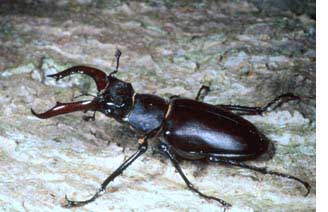
Photo Credit: Peter Wakely/ English Nature
|